Feline asthma is a common respiratory condition in cats, but it’s one that often goes
unrecognized at first. We have our fair share of asthmatic cats at Animal Hospital at Thorndale.
Have you ever seen your cat have sudden, noisy coughing fits that look like they’re trying to hack up a hairball, but nothing comes up? What about a persistent wheeze or even brief episodes of open-mouth breathing? While these signs can seem minor at first, these could be the tell-tale signs of feline asthma.
Here is a short video we found online with examples of feline asthma. We are hoping Sven has found some relief.
Feline asthma is a chronic inflammatory disease of the lower airways. Similar to human asthma, the airways inside the lungs of affected cats become inflamed and constricted, making it harder for air to move in and out of the lungs. Many cats with asthma initially show mild or intermittent signs, which can easily be mistaken for hairballs or an occasional cough. Understanding what asthma is can help owners recognize problems early and seek proper care.
Common Triggers
Asthma flare-ups are often linked to inhaled irritants. Not every cat reacts to the same triggers, and some cats may have multiple contributing factors.
Common triggers include:
• Dusty or scented cat litter
• Cigarette or vape smoke
• Candles, incense, and air fresheners
• Strong cleaning products
• Pollen, mold, and dust mites
• Aerosol sprays
Clinical Signs of Feline Asthma
The most common sign of feline asthma is coughing, usually dry, non-productive, often with that classic stretched-neck posture
Other signs may include:
• Wheezing or noisy breathing
• Breathing faster than normal
• Using their belly muscles to breathe (you'll see their sides working hard)
• Lethargy or decreased activity
• Open-mouth breathing
** Acute respiratory distress—panting, blue-tinged gums, struggling to breathe—is a
MEDICAL EMERGENCY. Seek veterinary care immediately. **
Diagnosing Feline Asthma
There is no single test that definitively diagnoses feline asthma. Diagnosis is usually made by combining several findings, including:
• Clinical history and description of clinical signs
• Physical examination
• Chest radiographs (X-rays), which may show changes consistent with airway
inflammation
• Ruling out other conditions such as pneumonia, heart disease, parasites, etc
In some cases, a cat’s response to treatment helps support the diagnosis.
Treatment and Management
Feline asthma is a lifelong condition, but it is often very manageable with consistent care.
Anti-Inflammatory Therapy
Reducing airway inflammation is the foundation of asthma treatment. Corticosteroids are the most commonly used medications for this purpose.
Depending on the individual cat, treatment may involve:
• Oral steroids
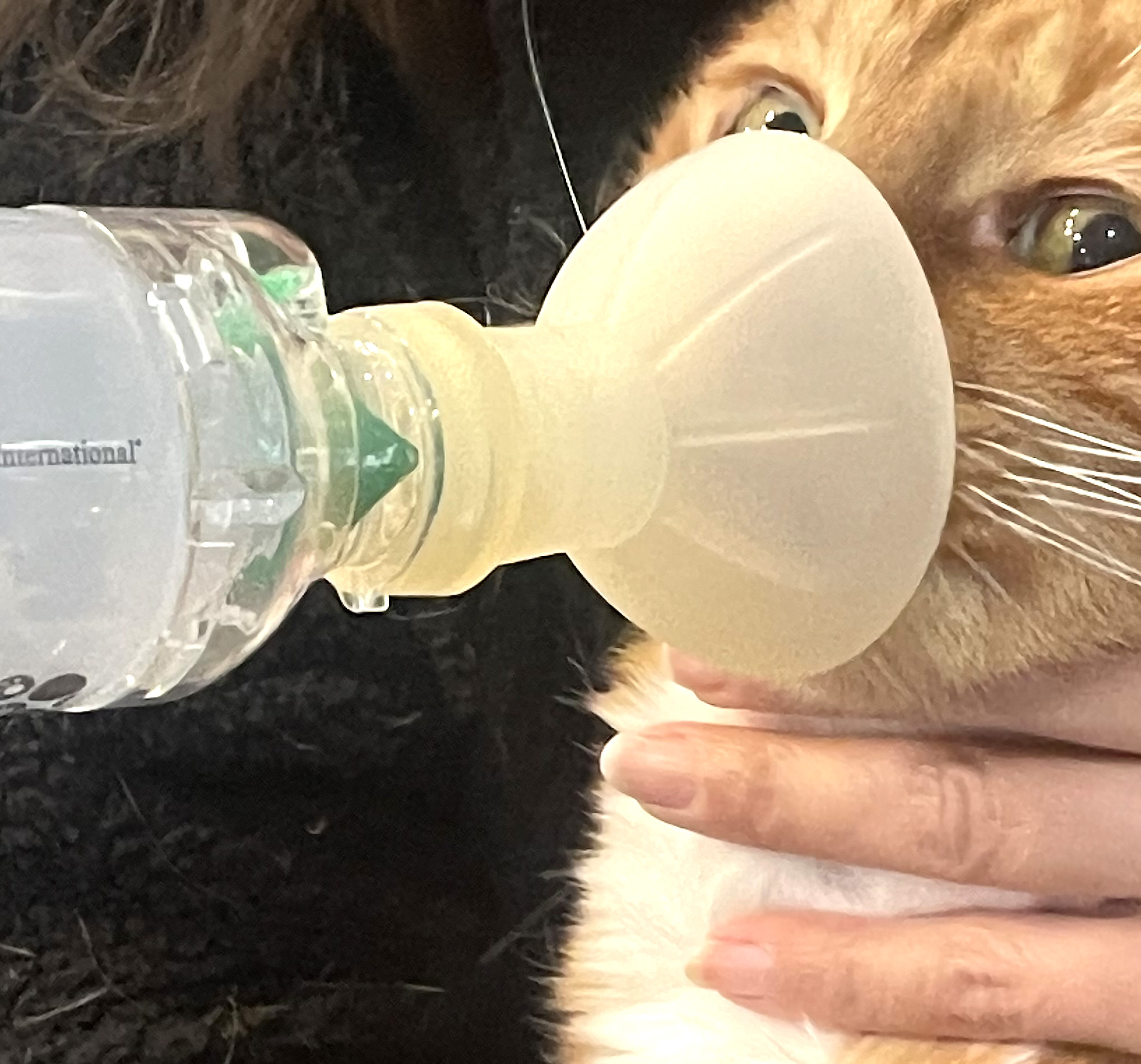
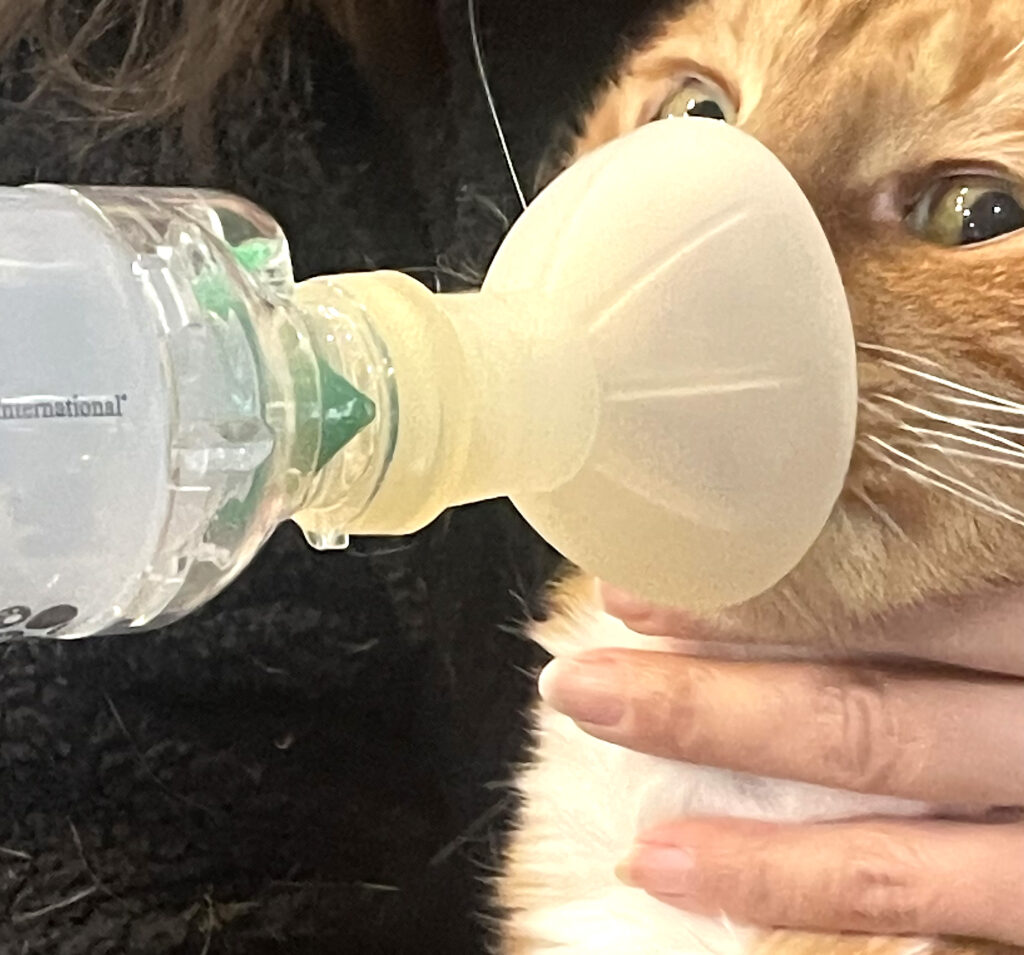
• Inhaled steroids administered through a spacer and mask.
Inhaled steroids are frequently recommended for long-term management because they target the lungs directly and minimize systemic side effects. Oral steroids are the mainstay of treatment especially in the acute phases.
Bronchodilators
Bronchodilators help relax the airway muscles and improve airflow. These medications are often used during acute flare-ups or as rescue therapy.
Environmental Management
Environmental control is an important part of long-term care. Helpful changes may include:
• Switching to low-dust or unscented litter
• Avoiding smoking indoors
• Eliminating scented sprays and candles
• Using mild, fragrance-free cleaning products
• Running a HEPA air purifier.
Inhaler Use in Cats
Although inhalers are commonly associated with people, they can be very effective in cats. Many cats tolerate inhaler therapy well once they become familiar with the routine, the key is gradual training with plenty of positive reinforcement.
Veterinary staff can demonstrate proper technique and help owners feel comfortable
administering inhaled medications at home.
Prognosis
Most cats with asthma have a good long-term outlook when the condition is properly managed. Some cats experience only occasional flare-ups, while others require daily medication to remain comfortable. Poorly controlled asthma can worsen over time and lead to permanent airway changes, which is why regular monitoring and veterinarian follow-up are important.
The Bottom Line
Feline asthma is a chronic but manageable condition. Early recognition, appropriate medical treatment, and attention to environmental triggers can significantly improve a cat’s quality of life.
If your cat has a persistent cough or any signs of breathing difficulty, schedule a veterinary visit today. Early diagnosis and a tailored management plan can help your asthmatic kitty breathe easy and live a happy and active life.