With advancements in pet glucose monitor technology, managing diabetes in pets has become much easier.
Applying a continuous pet glucose monitoring system to your diabetic pet is a great way to monitor glucose levels throughout the day without the need for frequent ear or paw pad pricks. Most pets tolerate the sensor very well, making it a less invasive and often less stressful option for both pets and their owners.
With continuous glucose monitoring devices, veterinarians can often use an online portal to review glucose readings remotely. This helps vets make informed decisions about your pet’s diabetes management and insulin therapy, without having to bring them into the hospital.
How to Apply a Continuous Glucose Monitoring Sensor to a Cat or Dog
Before you apply a continuous pet glucose monitoring system, you’ll want to gather the proper supplies. Having the right supplies nearby will help prepare you for successful application, making the process more seamless for both you and your pet.
Step 1: Gather Supplies
The first thing you’ll want to grab is the glucose monitoring sensor that you are applying. Have the sensor nearby and ready to go so it’s easy to locate once everything has been prepped for application.
Next, you’ll want to gather surgical skin glue. You’ll use this glue around the edges of the monitor to better secure it to your pet’s skin for longer-lasting attachment. From here, gather a pair of hemostats or tweezers. These will come in handy when removing the applicator of the sensor, which can be a bit meticulous.
The final step in gathering your supplies is downloading the monitoring app. This app can typically be downloaded right from your app store and it’s what you’ll use to track data from the glucose monitoring system.
Step 2: Prep the Area of Application
It’s important to first prep the area where the glucose monitoring system will be applied. Start by clipping a small amount of fur from a flat area of your pet’s body, such as their back.
Once you’ve clipped the fur to form a shaved application area, it’s time to clean the area. Using an alcohol pad, thoroughly disinfect the area, removing any dirt or loose hair.
Allow the skin to dry completely after cleaning. A dry surface will allow the sensor to firmly stick to the skin.
Step 3: Remove the Sensor From the Package
When you’re ready to remove the sensor from its packaging, please be sure to carefully follow the instructions listed on the package. Each sensor model and manufacturer may have different instructions, so it’s important to follow the unpackaging steps for your specific sensor.
Step 4: Prepare the Sensor for Application
Prepare the pet glucose monitor by applying 5–7 small dots of surgical glue around the outer edge of the sensor. Adding skin glue helps ensure secure adhesion of the sensor to the skin and can help the sensor stay attached longer, especially for active pets.
Step 5: Apply the Sensor
Now that everything has been prepped, you’re ready to apply your pet’s glucose monitoring system.
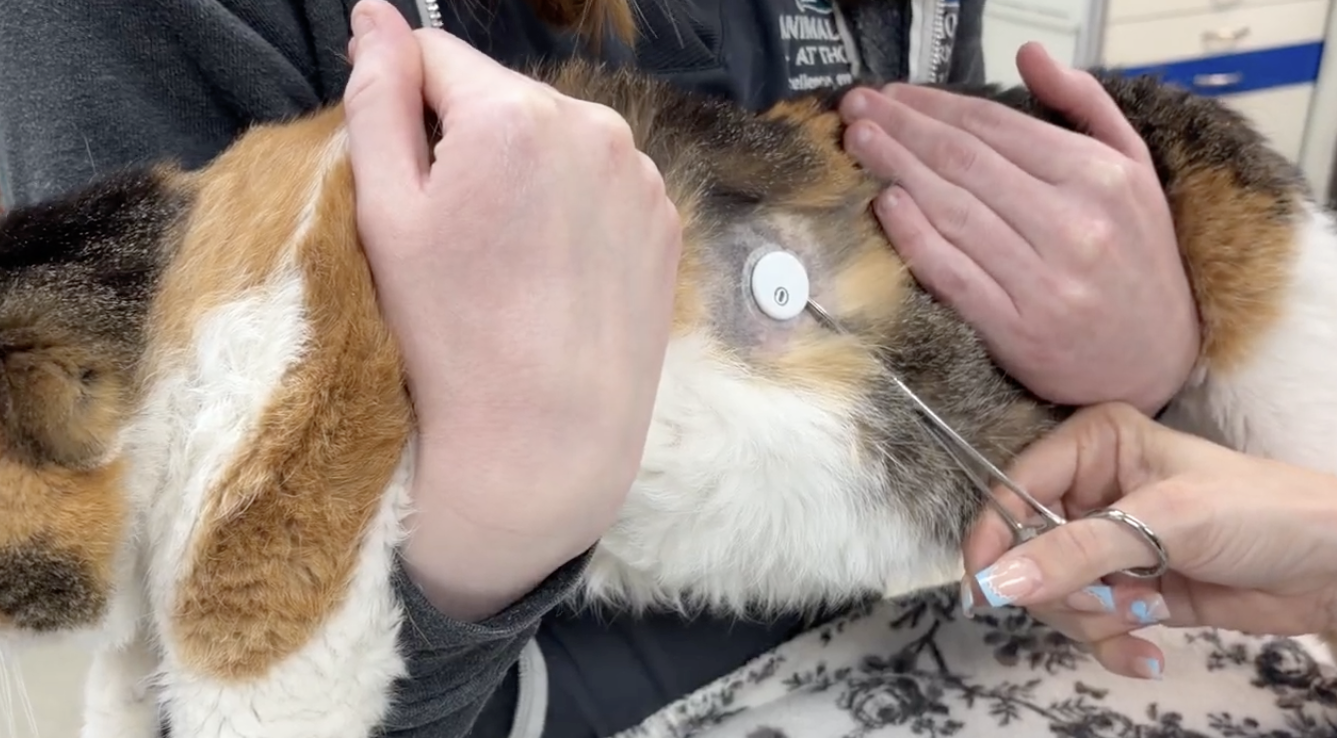
To apply the system, carefully position the applicator over the prepared area and firmly press down. Hold the applicator in place for about 5-10 seconds before removing.
Finally, to remove the applicator, use your tweezers or hemostats to carefully separate the fabric surrounding the sensor from the applicator and onto your pet’s skin.
Step 6: Activate the Sensor
With the glucose monitor successfully applied, you can now open the glucose monitoring app on your phone and scan the sensor.
Once scanned, the sensor will begin recording blood glucose data and you’ll be able to obtain glucose readings directly from your smartphone.
Professional Glucose Monitoring for Your Pet
Continuous pet glucose monitoring systems have become a valuable tool for monitoring diabetes in cats and dogs. They provide a convenient, less invasive alternative to traditional blood glucose testing and offer detailed information that can help you and your veterinarian better manage your pet’s diabetes.
With proper application and a little preparation, most pets adjust to wearing the sensor remarkably well, making blood glucose monitoring easier and more informative than ever.
The technicians and assistants at Animal Hospital at Thorndale are well trained in the use and placement of continuous glucose monitors. We have appointments available to place them for you, or train you on how to properly place them at home. Our team is dedicated to working with you to provide the most loving care for your diabetic pets.