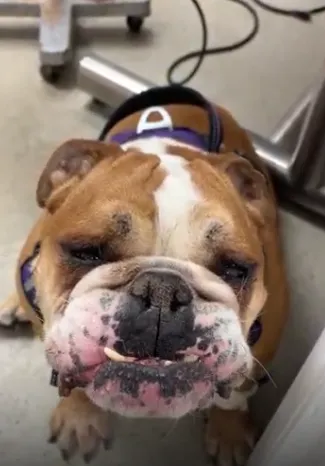
Summer is here! The grills are fired up, the pool floats are inflated, and everyone is having fun in the sun. While we may love the heat, it may not be safe for our furry friends, especially the flat-faced bully breeds.
For brachycephalic breeds such as Pugs, French Bulldogs, and English Bulldogs, summer isn’t just about chasing tennis balls and begging for hamburgers. It can quickly become dangerous.
How Do Dogs Cool Themselves Down?
Unlike humans, dogs don’t sweat to cool themselves down. Instead, they rely primarily on panting. As air passes over the moist surfaces of the respiratory tract, heat is released from their body.
Unfortunately, brachycephalic dogs were not exactly designed with a functional cooling system. Their narrowed nostrils, elongated soft palates, and increased resistance in their air ways, make it much harder for air to move efficiently. In other words, when temperatures rise, their cooling system is working with a clogged filter and a weak fan.
Because these dogs cannot effectively cool themselves they often become overheated, putting them at significantly higher risk for heat stroke.
What are the Symptoms of Heat Stroke in a Dog?
Heat stroke is a true medical emergency and requires immediate intervention. If your dog has been out in the heat, especially when temperatures are exceeding 80°F, and is showing signs such as uncontrolled panting, weakness, and/or collapse then you should immediately get them to the closest emergency vet.
Pets experiencing heat stroke can have a body temperature as high as 106°F or higher. To put that into perspective, a normal canine temperature ranges from approximately 99.5–102.5°F. At 106°F, vital organs, such as the brain, kidneys and other body systems can begin to suffer serious damage.
What to Do if Your Dog Has a Heat Stroke
When a patient presents in heat stroke, the most important treatment is to initiate active cooling. The goal is straightforward, to cool the patient safely and efficiently. Active cooling includes:
- soaking the patient with cool water
- applying ice packs to areas with high blood flow
- use fans to increase evaporative cooling
- provide supplemental oxygen to support cooling through respiration
- supplying IV fluids to assist with heat dissipation throughout the body and correct any dehydration caused by excessive panting
Be Cautious of Rebound Hypothermia
One aspect of treating heat stroke in dogs through active cooling is that we don’t want to keep cooling forever. If cooling continues for too long, patients can develop rebound hypothermia, where body temperature drops too low.
For this reason, active cooling is typically discontinued once the patient’s temperature reaches approximately 103°F. Correcting a low body temperature can be even more difficult than treating a high temperature.Timing is everything.
How to Help Brachycephalic Breeds
With brachycephalic cases, breathing becomes increasingly difficult during heat stroke. Placing an endotracheal tube to secure the airway and improve airflow may be necessary. This will allow more effective heat release through respiration and helps reduce the work of breathing. Placing an endotracheal tube may require administration of sedative medications.
How Does Heatstroke Impact Your Pet’s Organs?
Prolonged hyperthermia can affect the brain. Patients may develop an altered mental state due to swelling within the brain. When this occurs, specialized intravenous medications such as hypertonic saline or mannitol may be administered to reduce swelling and protect neurological function.
Further multiorgan failure can occur as well. If heat stroke in dogs is not corrected quickly, patients can experience acute kidney failure, liver damage, and clotting disorders. When this occurs chances of survival decrease and our heat stroke victim is entered in severely critical status.
Heat stroke can progress rapidly. Early recognition, aggressive treatment, and intensive monitoring are critical to giving these patients the best chance for recovery. The sooner treatment begins, the better the outcome.
How to Keep Your Pet Safe in the Heat
You can help keep your dog safe from heat stroke by following these precautions:
- Avoid exercise and long walks during the hottest parts of the day
- Always provide access to fresh water and shade
- Never leave a pet in a parked vehicle without air conditioning, even for a few minutes
- Keep brachycephalic breeds in air-conditioned home during extreme heat
- Watch for excessive panting, weakness, drooling, or collapse
We love summer as much as anyone, but while your dog may think they’re ready for a sprint across the backyard, their body may disagree.
This summer, keep your pets cool, calm, and comfortable. A little prevention goes a long way toward avoiding a heat stroke emergency and ensuring everyone enjoys a safe and happy summer season.
If your pet needs help, Animal Hospital at Thorndale has emergency and critical care specialists ready to jump into action.