When your pet isn’t feeling well, sometimes a physical exam and routine lab work only tell part of the story. Your veterinarian may need a closer look at what’s happening inside the body. That’s where ultrasound can be incredibly helpful.
At Animal Hospital at Thorndale, we’re proud to offer advanced veterinary ultrasound imaging right here at our hospital, with the added benefit of having Dr. Renee Simpler VMD, DACVR on our team. Dr. Simpler is a veterinary board certified radiologist. Having her on our team gives our patients access to a level of diagnostic expertise often associated with much larger veterinary or specialty hospitals.
What Exactly Is a Veterinary Ultrasound?
A veterinary ultrasound is a non-invasive imaging tool that uses sound waves to create real time images of your pet’s internal organs. Most people are familiar with ultrasound in human medicine, especially during pregnancy, but it has many important uses in veterinary medicine as well.
Unlike X-rays, which are especially useful for looking at bones and certain changes in the chest and abdomen, ultrasound allows vets to evaluate the appearance, structure, and movement of many soft tissues and internal organs.
What Happens During a Vet Ultrasound?
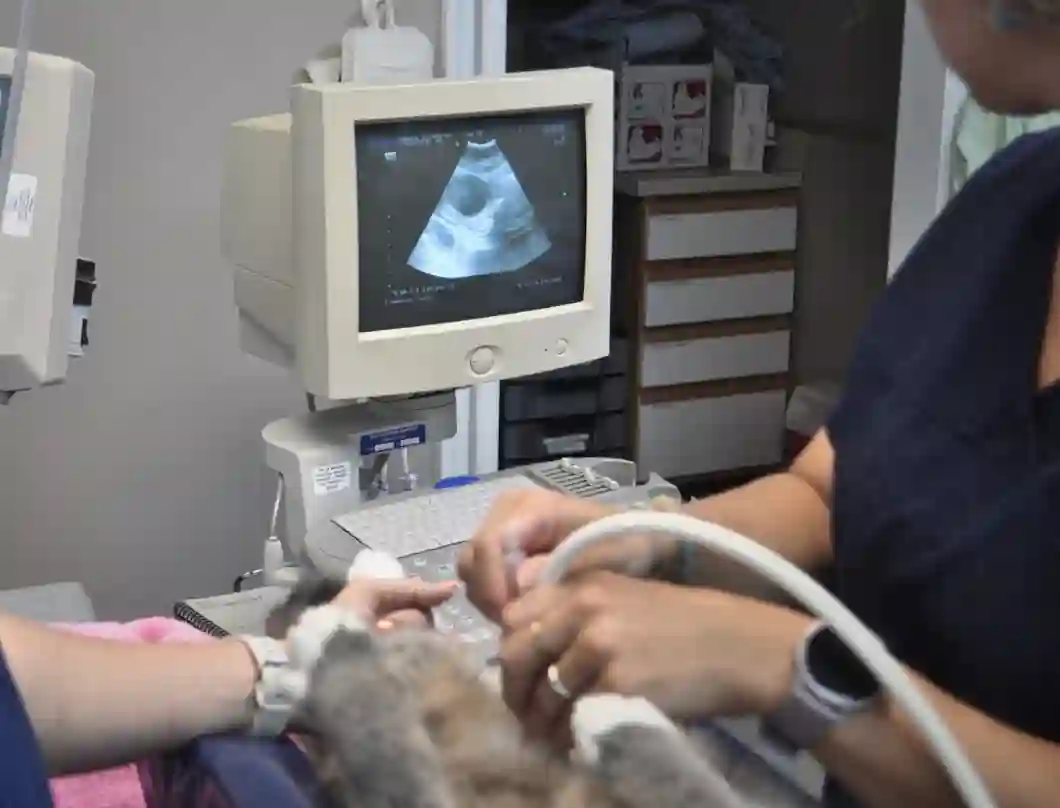
During an ultrasound, fur usually needs to be shaved from the area being examined. Your pet is positioned comfortably while ultrasound gel is applied to the skin. A handheld probe called a transducer is then moved over the area to create images on a monitor.
The procedure itself is not painful, and many pets tolerate it very well. Depending on the patient and the type of examination needed, mild sedation may sometimes be recommended so we can obtain the clearest and most complete images possible.
What Can an Ultrasound Tell Us?
Ultrasound can help veterinarians evaluate many areas of the body. In veterinary medicine it is most commonly used to evaluate inside the abdomen. It can provide valuable information about organs such as the liver, gallbladder, kidneys, urinary bladder, spleen, stomach, intestines, pancreas, adrenal glands, and reproductive organs.
When Is An Ultrasound Recommended?
Our veterinarians may recommend an ultrasound if your pet has ongoing vomiting or diarrhea, unexplained weight loss, changes in appetite, abnormal bloodwork, urinary problems, abdominal discomfort, or other symptoms that warrant a closer look.
Veterinarian ultrasound can help identify changes such as inflammation, abnormal fluid, bladder or kidney stones, changes in organ size or appearance, intestinal abnormalities, masses, and other concerns. In some cases, ultrasound can also be used to help guide procedures such as collecting fluid samples.
It’s important to remember that ultrasound is one piece of the diagnostic puzzle. The findings are interpreted alongside your pet’s history, physical examination, bloodwork, X-rays, and other testing when appropriate.
The Advantage of a Board-Certified Veterinary Radiologist
Having high quality imaging equipment is important, but there is another part of ultrasound that is just as important, the person performing and interpreting the examination.
Ultrasound is highly dependent on training and experience. The veterinarian performing the study needs to recognize subtle changes, know which images and measurements are important, and understand what those findings may mean for the individual patient.
High-Level and Personable Care
Our hospital has a board-certified radiologist, which is a veterinarian who has completed extensive additional training focused specifically on diagnostic imaging. Veterinary radiologists receive advanced training in areas such as ultrasound, X-rays, CT, MRI, and other forms of diagnostic imaging before completing the rigorous requirements necessary to achieve board certification.
This level of expertise is commonly found in larger specialty referral hospitals. Having it available within our hospital means we can offer our patients a higher level of diagnostic imaging while maintaining the personal, familiar care of your local veterinary team. For pet owners, that can mean greater confidence in the ultrasound findings, more detailed information for the veterinarian managing the case, and a clearer path toward deciding next steps.
Access To Advanced Veterinary Care
When a pet is sick, families already have enough to worry about. Being told that advanced diagnostics are needed can make an already stressful situation feel even more overwhelming, particularly when it means traveling to an unfamiliar hospital for imaging.
Our goal at the Animal Hospital at Thorndale is to make advanced veterinary care more accessible for our clients. Reach out today to get compassionate care for your pet.