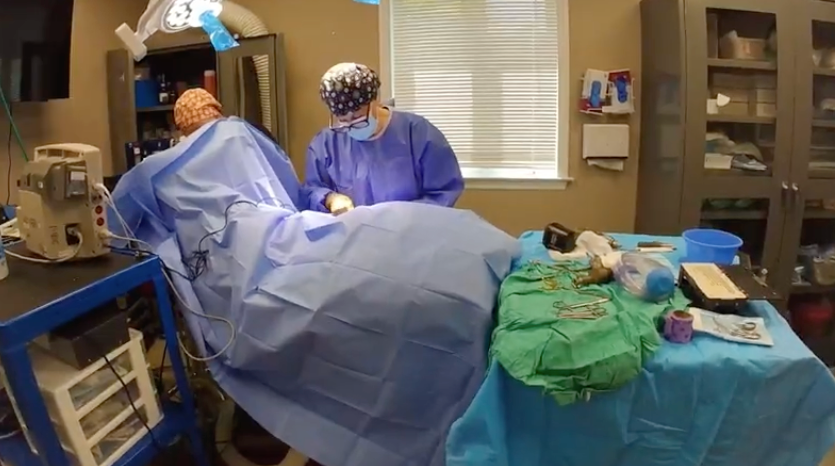
Think of your dog as a four-legged athlete. Just as a quarterback can tear their ACL after taking a hit on the field, dogs can rupture their cranial cruciate ligament (CCL) while chasing a ball, leaping off the couch, or simply playing in the yard.
The difference is that human athletes often suffer a sudden traumatic injury, while many dogs gradually experience weakening of the ligament over time until one intense zoomie session causes a tear or complete rupture.
When that happens, your canine MVP may suddenly find themselves limping to the sidelines and in need of some orthopedic help to get back in the game. That’s where our board-certified surgeon steps in to get your star player off the bench.
What is the CCL & Why is it Important?
One of the most common causes of hind limb lameness in dogs is a CCL injury. The CCL plays a critical role in stabilizing the knee joint. The cranial cruciate ligament is located within the knee joint and helps prevent the tibia or shin bone from sliding too far forward. It also helps control internal rotation and hyperextension of the knee.
When this ligament becomes damaged, dogs can experience significant pain, limping, and reduced mobility. Fortunately, surgical options such as Tibial Plateau Leveling Osteotomy, more commonly known as TPLO surgery, can help restore your pet’s comfort and mobility. They’ll be back to playing ball in no time!
Causes & Signs of a CCL Injury
There are several factors that can contribute to CCL degeneration such as obesity, abnormal limb conformation, previous injury, compensating for injury of the opposing limb, and breed disposition. Large breeds such as labs, rottweilers, boxers and pit bulls are prone to weakened ligaments.
Dogs with a CCL injury may have sudden or intermittent hind leg limping, difficulty standing after lying down, reluctance to jump on the couch or walk up the stairs, sitting with affected leg extended, swelling of the joint, or overall decrease in activity. Some dogs may only have a partial tear initially, resulting in intermittent lameness that will progress over time.
If your pet exhibits any of these signs, you should plan a visit with your veterinarian for a thorough orthopedic exam. During your pet’s visit, expect a detailed orthopedic exam and possibly x-rays of the joint. Radiographs cannot directly visualize the ligament itself, but can reveal signs of a CCL tear such as joint swelling, arthritis, and other changes associated with cruciate disease.
What Happens if There is a Tear?
Once there is a CCL tear, the knee becomes unstable. Without stabilization, ongoing joint movement can lead to other issues such as chronic pain, arthritis, and other injuries. While some dogs may be managed conservatively, with exercise restriction and medication to treat pain and inflammation, surgery is generally recommended for most dogs.
TPLO surgery for dogs is considered one of the gold-standard surgical treatments for CCL tears. TPLO surgery changes the biomechanics of the knee, so that the joint remains stable even without a functional ligament.
During the procedure, a specialized bone plate and screws are used to secure the new joint position. The newly structured joint helps eliminate the forward thrusting of leg bone that occurs when the dog bears weight. This allows the knee to function normally despite the damaged ligament.
TPLO Success Rate & Recovery
TPLO surgery has an excellent long-term success rate. Post-operatively patients experience faster return to function compared to some alternative procedures. Many also exhibit improved stability during activity, and a high percentage of pets return to normal activity. Many dogs begin bearing weight on the operated leg within days after surgery.
How You Can Help Your Dog Recover
For a patient to achieve the best possible prognosis after surgery, it is most important for owners to comply with recovery protocols the surgeon provides.
Recovery period typically spans 8 to 12 weeks. Detailed discharge instructions are provided for postoperative care and typically includes strict activity restriction, short leash walks for going to the bathroom only, pain management with medication and ice packs, physical therapy exercises, and follow-up appointments with the surgeon and x-rays.
Most dogs gradually return to normal activities after their veterinarian confirms bone healing.
Prognosis After TPLO Surgery
The prognosis following TPLO surgery for dogs is excellent for most patients. Studies have shown that over 90% of dogs regain good to excellent limb function after recovery.
However, it’s important to note that dogs who tear one cruciate ligament have an increased risk of developing a tear in the opposite knee in the future. Maintaining a healthy weight and following your veterinarian’s recommendations can help reduce additional stress on the joints.
The Importance of Early Diagnosis
Early diagnosis and treatment of a cranial cruciate ligament tear can make a significant difference in your dog’s comfort, mobility, and long-term joint health. If your dog is displaying any of the symptoms of a possible CCL injury, schedule an evaluation with your veterinarian as soon as possible.
With advanced procedures such as TPLO surgery, many dogs can get back in the game and off the injury list for years to come.
Concerned Your Dog May Have a Cruciate Ligament Injury?
Contact Animal Hospital at Thorndale to schedule an orthopedic evaluation and discuss whether TPLO surgery with our board-certified surgeon is the right option for your pet.